
eSIM vs Physical SIM: Which Should Travelers Use?
How eSIMs and SIM cards compare for travel, when each one wins, the risks of each and the dual-SIM setup most travelers end up using.
Quick answer
- With a compatible, unlocked phone, a travel eSIM is usually the more convenient choice for short trips.
- A physical SIM still makes sense for phones without eSIM, long stays that need a local number, or moving a SIM between devices.
- Most travelers can use both: the home SIM for calls and texts, a travel eSIM for data.
- Neither type is cheaper in itself; compare plans by data, validity, network and price.
For years, getting mobile data abroad meant hunting for a SIM card shop, finding a paperclip to open the tray and hoping you didn't lose your home SIM in the process. eSIMs have changed that for a lot of travelers, but physical SIM cards haven't disappeared, and in some situations they're still the better option.
This guide compares eSIMs and physical SIMs from a traveler's point of view: how each one works, where each one wins, the risks to watch for and how most people end up using both on the same phone.
The Short Answer
If your phone supports eSIM and is unlocked, a travel eSIM is usually the more convenient choice for short and medium trips. You can buy and install it before you leave, keep your home SIM in place and have data the moment you land.
A physical SIM still makes sense if your phone doesn't support eSIM, if you need a local phone number for a long stay, or if you regularly move one SIM between devices. Many travelers end up using both: their home SIM in the tray and a travel eSIM for data.
What's the Difference?
Both do the same job. They hold the credentials that let your phone sign on to a mobile network and identify your plan.
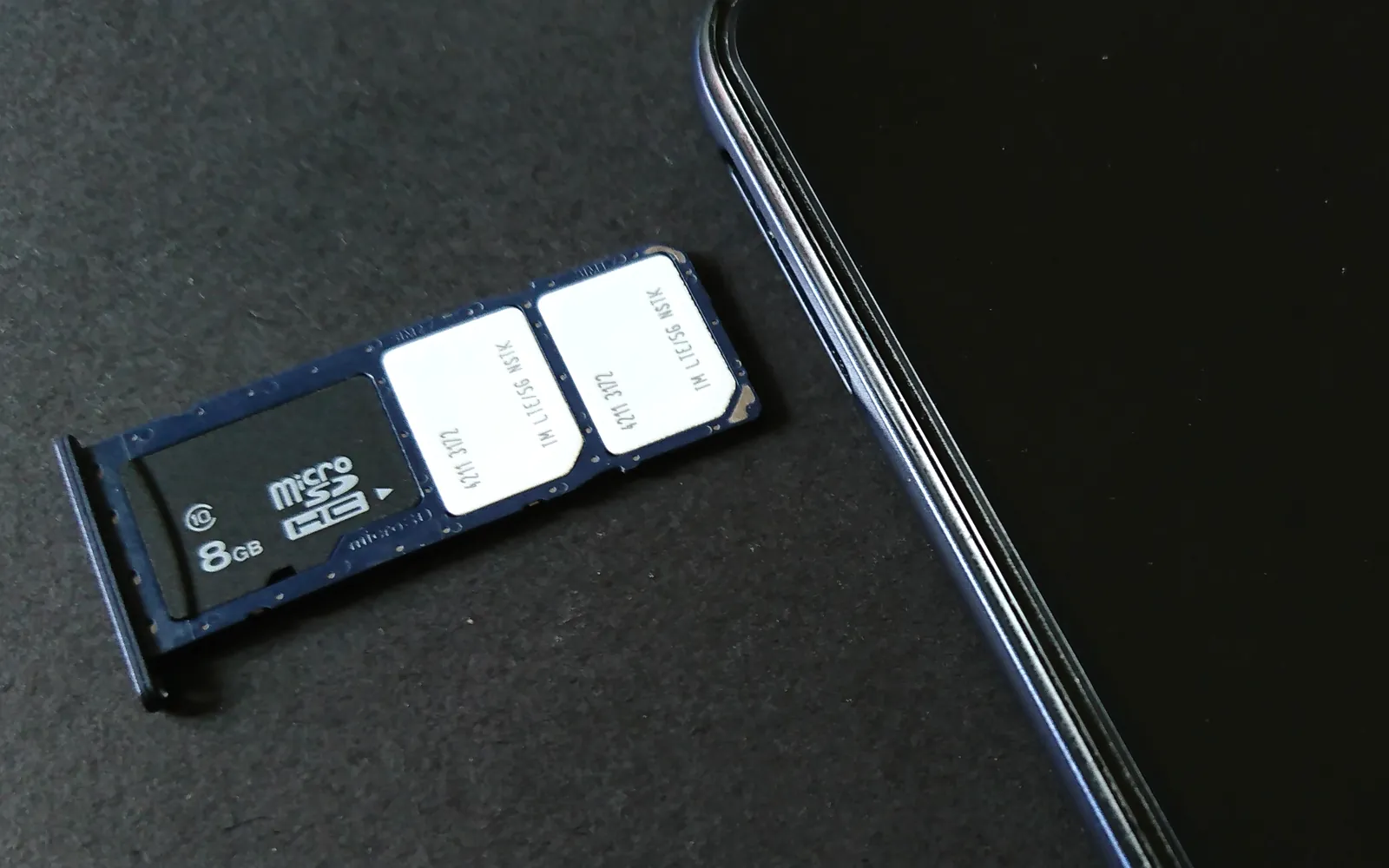
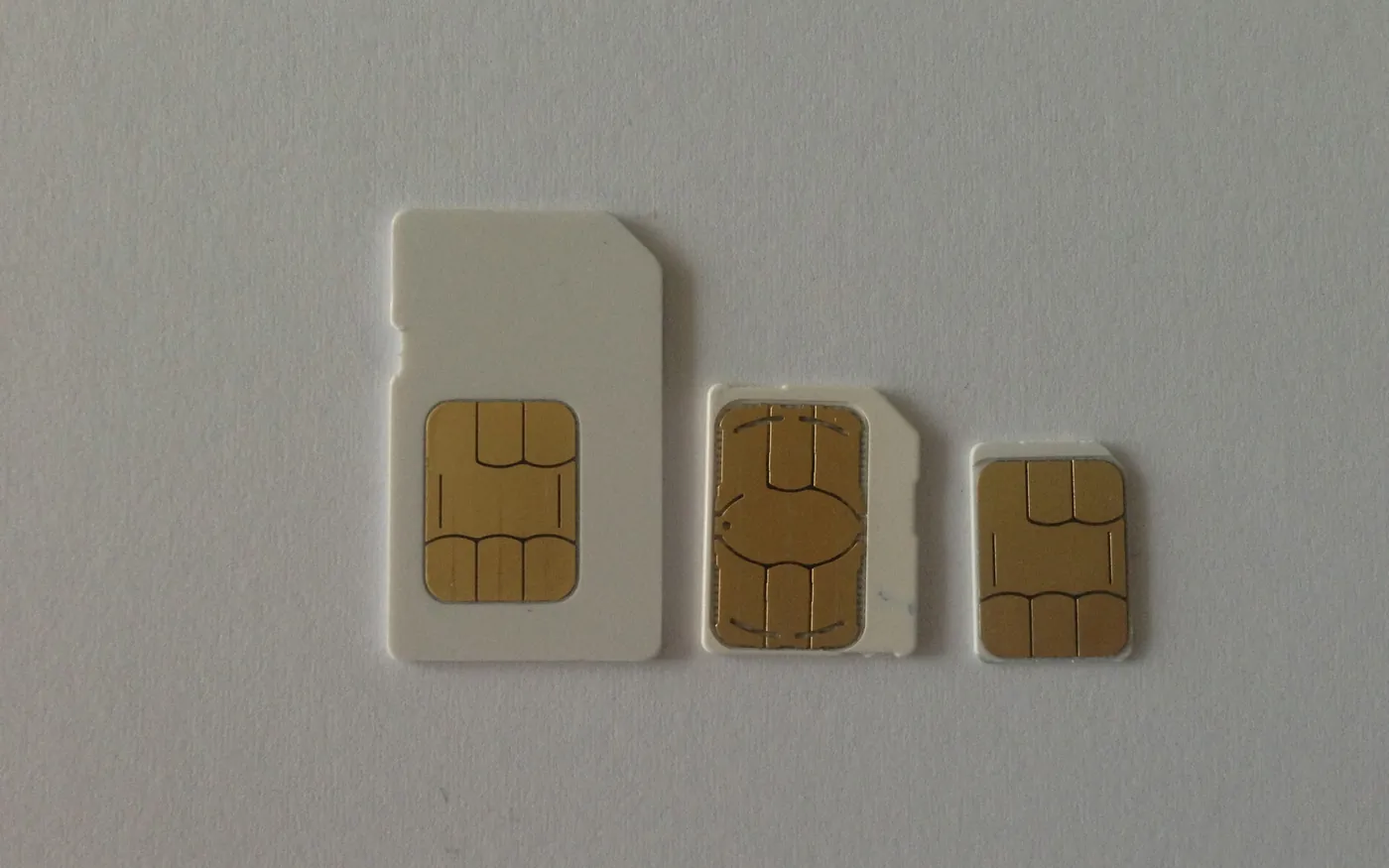
A physical SIM is a removable card. Today that's almost always a nano SIM, the smallest card size, which sits in a tray on the side of the phone.
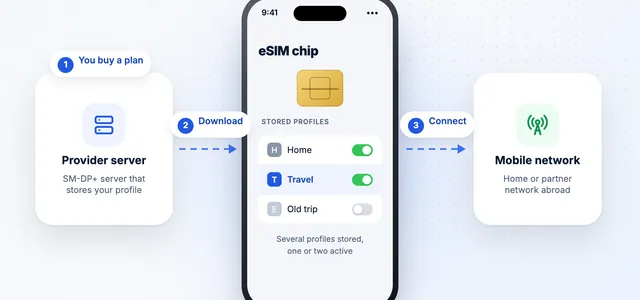
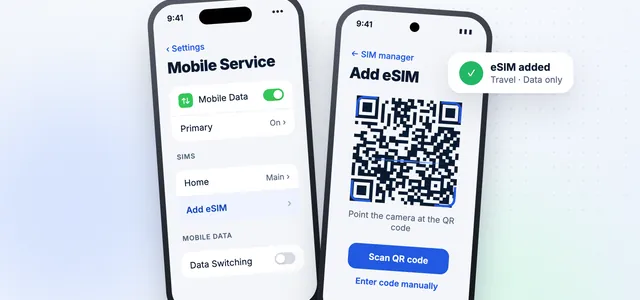
An eSIM is a chip built into the phone. Instead of inserting a card, you download a profile onto that chip, usually by scanning a QR code. If you'd like the details, our guide on how eSIM works explains what happens behind the scenes.
eSIM vs Physical SIM at a Glance
| eSIM | Physical SIM | |
|---|---|---|
| Getting it | Buy online and download, often within minutes | Buy in a shop, at an airport or by post |
| Setup | Scan a QR code or use an app | Open the SIM tray and insert the card |
| Phone support | Needs an eSIM-compatible, unlocked phone | Works in almost any unlocked phone with a SIM tray |
| Switching phones | Depends on the provider, sometimes not possible | Move the card to another phone |
| Losing it | Can't be lost, but deleting it is usually permanent | Small and easy to misplace |
| Several plans | Store several profiles on one phone | One card per SIM slot |
| Local phone number | Many travel eSIMs are data-only | Local SIMs often include a number |
When an eSIM Is the Better Choice
Short trips and multi-country routes
For a week in one country, or a trip across several, buying a plan online before you leave is hard to beat. Regional eSIM plans can cover many countries with one profile, which saves buying a new card at every border.
When you want to keep your home SIM in place
With an eSIM for data, your home SIM never leaves the phone. You stay reachable on your usual number for calls and texts (your carrier's roaming rates may apply), and there's no tiny card to keep safe in your wallet. This is especially useful if your bank sends verification codes by text.
Late arrivals and tight connections
Buying a physical SIM on arrival can mean queues, closed kiosks at night and, in many countries, showing your passport to register the card. With an eSIM installed in advance, you can order a ride or check directions before you reach the exit.
When a Physical SIM Still Makes Sense
Your phone doesn't support eSIM
Older phones and some budget models don't have an eSIM chip. In that case, a local or travel SIM card is the realistic option, along with roaming or a pocket Wi-Fi router.
You need a local number for a long stay
If you're staying for months, working locally or need a number that local businesses can call and text, a local SIM with a full plan is often the better fit. Many travel eSIMs are data-only. Expect to show ID to register a local SIM in many countries.
You move a SIM between devices
A physical SIM is easy to move between phones, a tablet or a mobile router. An eSIM usually stays tied to the device it was installed on.
Using Both: The Common Dual-SIM Setup
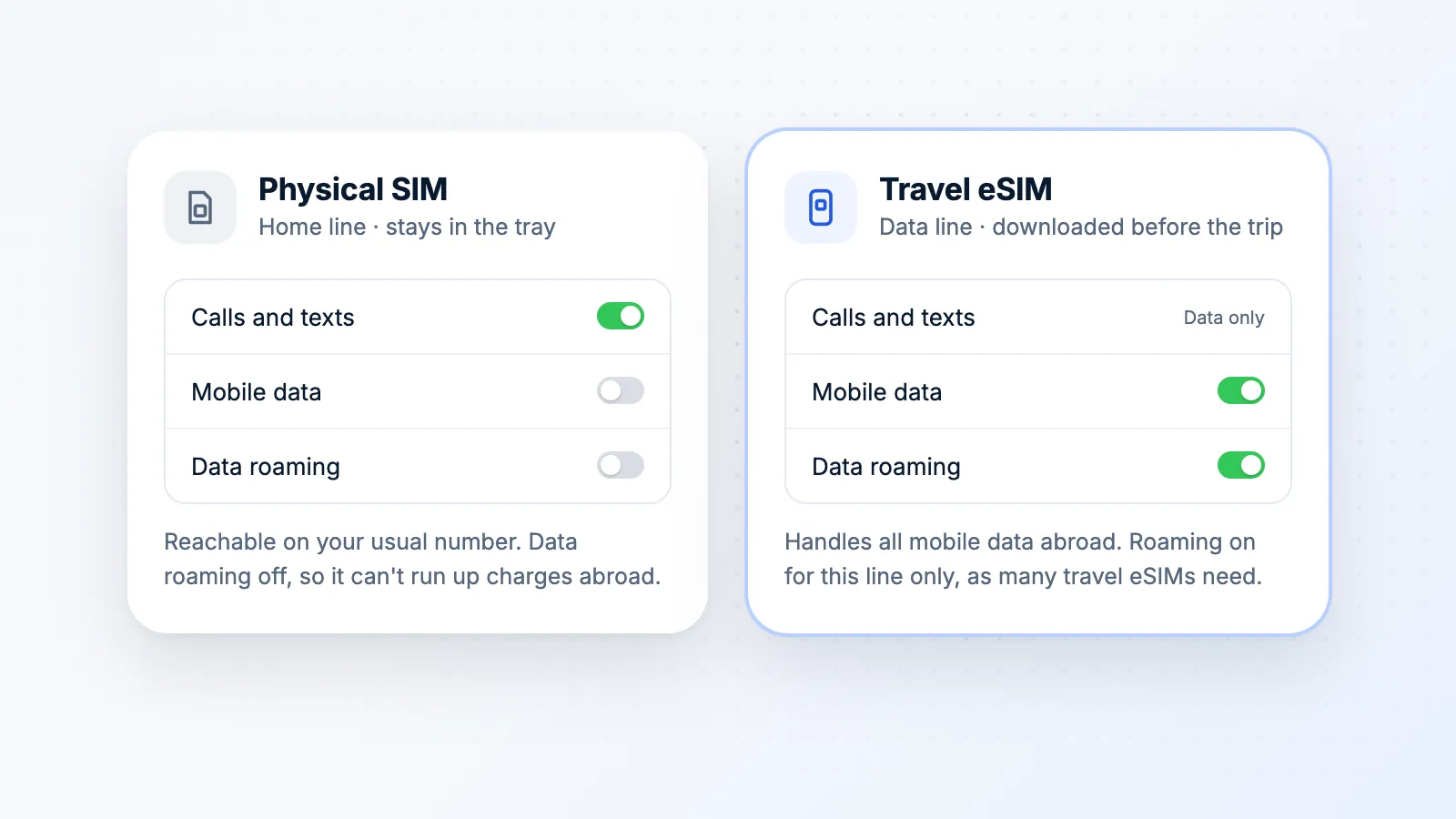
Most phones with eSIM are also dual SIM phones, and that combination suits travel well:
- Physical SIM (home): stays in the tray for calls and texts, with data roaming turned off so it can't use data abroad. Our guide on turning off data roaming shows how.
- eSIM (travel): handles mobile data, with data roaming turned on for that line.
You choose which line handles data, calls and messages in your phone's SIM or mobile settings. It takes a minute to set up, and it means you never have to take your home SIM out.
Some newer phones, including iPhone models sold in the US since the iPhone 14, have no SIM tray at all and only use eSIMs. On those phones, both your home line and your travel line are eSIMs, and the same setup applies.
Practical Risks of Each
Physical SIMs are tiny and easy to lose, especially when you swap cards in a taxi or at an airport gate. You also need a SIM tool or a paperclip to open the tray, and a damaged card means a trip to a shop.
eSIMs can't be dropped, but they're tied to your phone. If the phone is lost, stolen or broken, moving the eSIM depends on the provider. Your home carrier can usually help with a transfer; for a travel eSIM, you may need to buy a new plan. And because many eSIMs can only be installed once, deleting one by mistake can mean paying again.
Keep your install details
Save your eSIM order confirmation and installation details somewhere you can reach without the phone, such as your email on a laptop. If something goes wrong, the provider will usually ask for them.
How to Decide in Two Minutes
Three questions settle it for most trips:
- Does my phone support eSIM, and is it unlocked? If not, your options are a physical SIM, roaming with your carrier or a pocket Wi-Fi router.
- Do I need a local phone number? For a short trip, usually not. A data-only eSIM covers maps, messaging and calls through apps. For a long stay, a local SIM with a number can be worth the extra paperwork.
- Am I crossing borders? If you're visiting several countries, a regional eSIM saves you buying a new SIM card in each one.
If your answers are yes, no and yes, an eSIM is very likely the easier route.
Is One Cheaper Than the Other?
Not because of the SIM type itself. Prices depend on the provider, the country, the amount of data and how long the plan lasts. A local SIM bought in a shop can be very good value for a long stay, while a travel eSIM saves time and works across borders for shorter trips.
The fairest comparison is plan against plan: data allowance, validity, network and price for the trip you're actually taking. You can browse eSIM plans by destination to see what's available where you're going.
Frequently asked questions
Can I use an eSIM and a physical SIM at the same time?
Yes, on dual SIM phones. A common travel setup keeps the home SIM in the tray for calls and texts and uses an eSIM for data.
Is the signal better on an eSIM or a physical SIM?
The SIM type doesn't affect signal quality. Coverage and speed depend on the network and your phone.
Can I switch my home number from a physical SIM to an eSIM?
Many carriers offer this, often in their app or in store. The process, and whether there's a fee, depends on your carrier.
What happens to my eSIM if my phone is lost or broken?
Contact the provider. A home carrier can usually move your number to a new eSIM. For a travel eSIM, you may need a new plan, depending on the provider's policy.
Are physical SIM cards being phased out?
Some phones are eSIM-only, such as iPhone models sold in the US since the iPhone 14, but physical SIMs are still widely used and sold.
Next step
Find an eSIM for your trip
Compare travel eSIM plans by destination, data and validity.
Find an eSIM for your tripData Roaming Editorial Team
We write practical, plain-English guides about using your phone abroad. Roaming prices and rules change, so we update guides regularly — always confirm current terms with your carrier. About our editorial approach

 USA
USA Japan
Japan France
 Europe
 Spain eSIM
 Italy eSIM
 Dubai eSIM
 UK eSIM
 Turkey eSIM