
Best eSIM for UK Travel in 2026
How to choose a UK eSIM: networks, data and validity, what Brexit means for European visitors, what a UK plan covers, and coverage beyond London.

Quick answer
- Coverage is strong across the UK's cities and main routes on all the major networks.
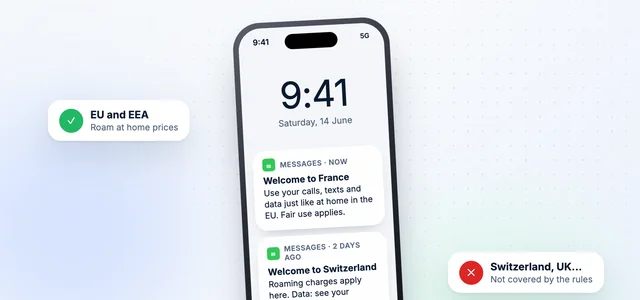
- Since Brexit, the UK isn't covered by the EU's roaming rules, so European operators can charge for it.
- A UK plan doesn't cover the Republic of Ireland, the Channel Islands or the Isle of Man.
- Plan ahead for the Scottish Highlands and national parks, where signal can be patchy.
The UK is easy to stay connected in: coverage is strong across the cities and main routes, and a travel eSIM gets you online the moment you land at Heathrow or Edinburgh. What's changed in recent years is the price of roaming. Since Brexit, the UK is no longer covered by the EU's roaming rules, so visitors from Europe can no longer count on using their home plan at no extra cost.
This guide covers how to choose the best eSIM for UK travel: networks, data and validity, what Brexit means for European visitors, coverage in the Highlands and on the Tube, and what a UK plan does and doesn't cover.
The Short Answer
For most visitors, the best eSIM for the UK is a data plan on one of the major UK networks, with enough data for your trip and a validity that starts when you arrive. If you're also visiting Ireland or mainland Europe, a Europe plan that lists the UK and every other country on your route is usually simpler.
UK eSIM Plans at a Glance
United Kingdom eSIM plans on Data Roaming
Live prices in US dollars
1 GB · 7 days
EE, 3
2 GB · 15 days
EE, 3
3 GB · 30 days
EE, 3
10 GB · 30 days
EE, 3
20 GB · 30 days
EE, 3
50 GB · 30 days
EE, 3
| Data | Validity | Network | Price | Buy |
|---|---|---|---|---|
| 1 GB | 7 days | EE, 3 | $1.14 | Buy |
| 2 GB | 15 days | EE, 3 | $2.08 | Buy |
| 3 GB | 30 days | EE, 3 | $3.20 | Buy |
| 10 GB | 30 days | EE, 3 | $8.56 | Buy |
| 20 GB | 30 days | EE, 3 | $15.20 | Buy |
| 50 GB | 30 days | EE, 3 | $34.00 | Buy |
Prices come from our live catalogue and update automatically. Every plan shown allows hotspot use.
See all 11 plansAt the time of writing, our UK plans connect through EE or Three, with 4G and 5G where available. Each plan lists its network before you buy.
How to Choose the Best UK eSIM
Any major network covers the cities
The UK's main networks are EE, Vodafone, Three and O2. Vodafone and Three have merged, but still run as separate brands for now. All of them cover London, the big cities and the main roads and rail lines well. EE is often described as having the widest coverage, which can help in rural areas.
Size your data for maps and transport
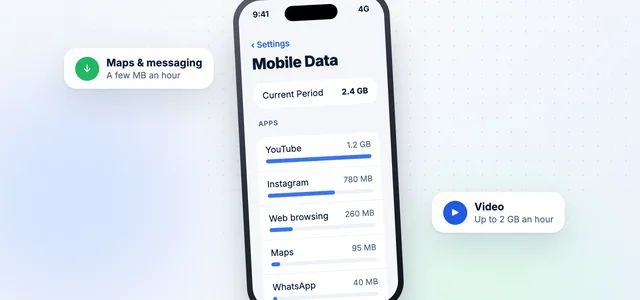
A UK trip uses data steadily: journey planning, live train times, maps and looking things up on the go. Video calls and streaming are what really use data, so plan for those separately.
Match validity to your dates
Our UK plans run from a week to six months. Choose one that covers your whole stay, and check whether it starts counting days when you install it or when it first connects in the UK.
Know you won't get a UK phone number
Like most travel eSIMs, ours are data-only, so they don't include a UK phone number. Every UK plan in the table above allows hotspot use, so you can share your connection with a laptop.
Visiting From Europe? What Brexit Changed
Before 2021, a SIM from any EU country could roam in the UK at home prices. Now the UK is outside the EU's roaming rules, so each operator decides what to charge. Some European operators still include the UK in their plans; others charge daily or per-gigabyte rates.
Check your operator's rates for the UK before you travel. If they charge, a travel eSIM is often the cheaper way to get data. Our guide to EU roaming rules explains which countries are covered and which aren't.
What a UK Plan Covers, and What It Doesn't
A UK plan covers England, Scotland, Wales and Northern Ireland. A few places are easy to mix up:
- The Republic of Ireland is a separate country. A UK plan won't cover it, so if you're crossing into Dublin or along the border, choose a plan that lists Ireland too.
- The Channel Islands (Jersey and Guernsey) and the Isle of Man aren't part of the UK. Check the plan's country list if you're visiting them.
- Gibraltar is a British Overseas Territory, not part of the UK, and needs its own coverage.
Coverage Beyond London

In London, Manchester, Edinburgh, Glasgow and the other big cities, coverage is excellent. On the London Underground, mobile coverage is being rolled out across the network: many central stations and tunnels now have it, but expect gaps on some lines.
The places to plan for are the Scottish Highlands and islands, national parks such as the Lake District and Snowdonia (Eryri), and some stretches of coast and rural railway. Download offline maps before you head out, and save tickets and bookings as screenshots.
Apps Worth Downloading Before You Go
- Citymapper or TfL Go for getting around London. You can tap in and out of the Tube and buses with a contactless card or phone.
- Trainline or National Rail for train times and tickets around the country.
- Google Maps works well everywhere for directions.
eSIM vs Local SIM vs Roaming
An eSIM suits most visitors with recent, unlocked phones: install it at home and you're online when you land, with your home SIM still in the phone.
A local SIM is easy to buy in supermarkets and phone shops, and can be good value for long stays, but you'll need to find a shop after you arrive.
Roaming with your home carrier is the least effort, but rates can be high, especially for visitors from outside Europe. Check the price and any limits first. Our guide to getting internet abroad compares the options.
Setting Up Your UK eSIM
- Check that your phone supports eSIM and is unlocked.
- Buy a plan that covers your whole stay.
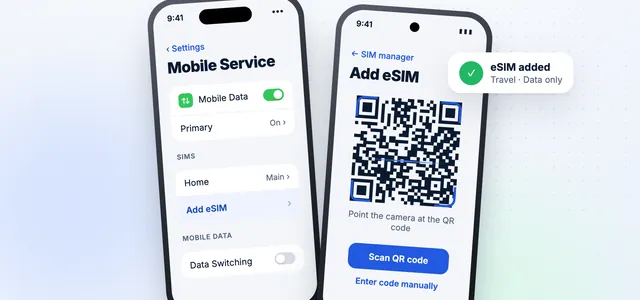
- Install it at home on Wi-Fi a day or two before you fly.
- When you land at Heathrow, Gatwick, Manchester, Edinburgh or any other airport, switch the eSIM on, set it as your mobile data line and turn on data roaming for that line.
- Keep data roaming off on your home SIM.
Our step-by-step guide shows how to install an eSIM on iPhone and Android.
Tips for Staying Connected in the UK
- Use Wi-Fi on trains and in cafés. Many trains, stations and cafés offer free Wi-Fi, though speeds vary.
- Carry a power bank for long days of navigation and photos.
- Know the emergency numbers. Dial 999 or 112 in an emergency; both work from any phone.
- Keep your home number reachable if you need bank security codes: leave your home SIM on with data roaming off.
Frequently asked questions
Which network is best for an eSIM in the UK?
EE, Vodafone, Three and O2 all cover the cities and main routes well. EE is often described as having the widest coverage. At the time of writing, our UK plans use EE or Three.
Does EU roaming work in the UK?
Not under the EU rules. Since Brexit, each European operator decides what to charge in the UK. Some still include it in their plans; others charge daily or per-gigabyte rates.
Does a UK eSIM work in Ireland?
Not in the Republic of Ireland, which is a separate country. A UK plan covers Northern Ireland. If you're visiting both, choose a plan that lists Ireland and the UK.
Does my eSIM work on the London Underground?
Mobile coverage is being rolled out across the Tube. Many central stations and tunnels now have it, but expect gaps on some lines.
How much data do I need for a week in the UK?
At around 500 MB a day, a week uses about 3.5 GB, so a 5 GB plan suits most visitors. Choose more if you'll stream or make video calls on mobile data.
Next step
See UK eSIM plans
Compare plans by network, data and validity.
See UK eSIM plansData Roaming Editorial Team
We write practical, plain-English guides about using your phone abroad. Roaming prices and rules change, so we update guides regularly — always confirm current terms with your carrier. About our editorial approach

 UK
 Europe
 France
 Spain
 USA eSIM
 Japan eSIM
 Italy eSIM
 Dubai eSIM
 Turkey eSIM